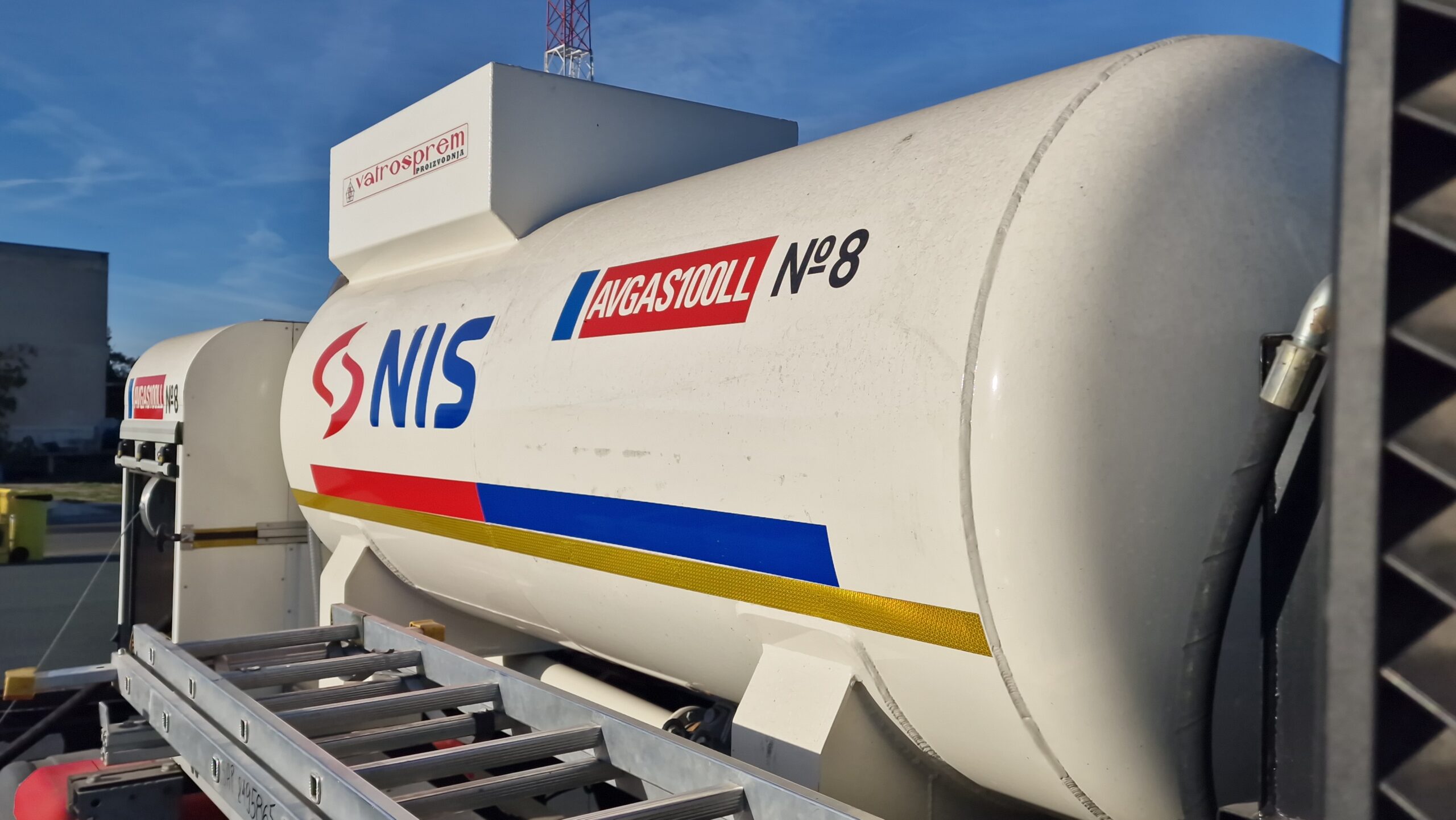
For nearly a century, piston-engine aircraft have run on leaded fuel. That era is now closing. Driven by an EPA finding that lead emissions from aviation gasoline endanger public health, the FAA and industry have committed to eliminating leaded avgas for U.S. piston aircraft by the end of 2030 (2032 in Alaska). Three unleaded fuels are now racing toward that deadline, each taking a different path to market.
Why 100LL Has to Go
100LL (“low lead”) is the last widely used leaded transportation fuel in the United States. Tetraethyl lead is added to prevent engine knock in high-compression piston engines, but it’s also a potent neurotoxin, especially harmful to children living near general aviation airports. In 2023 the EPA formally determined that lead emissions from piston aircraft endanger public health, triggering a legal requirement for the FAA to move the fleet to unleaded fuel. The public-private EAGLE initiative (Eliminate Aviation Gasoline Lead Emissions) was formed to coordinate that transition without grounding the roughly 170,000 piston aircraft that depend on 100-octane fuel.
The Three Contenders
GAMI G100UL. Developed by General Aviation Modifications Inc. over more than a decade, G100UL was the first fuel to receive a broad FAA-approved model list Supplemental Type Certificate, in September 2022, covering nearly all spark-ignition piston aircraft engines. GAMI markets it as a true drop-in replacement requiring no engine modifications, only placarding. It has matched or exceeded 100LL’s detonation protection in FAA-observed testing and began reaching airports in late 2024. Its main controversy: GAMI has declined to pursue an ASTM International production specification, the industry-standard process other fuel makers use, which has made some distributors and insurers cautious about handling it.
Swift Fuels 100R. Swift took the opposite route, earning an ASTM production specification (D8603) for its 100-octane unleaded fuel. As of mid-2026, 100R has FAA certification via STC for more than 1,200 engine models, with airframe approvals continuing to expand, and it’s already sold commercially in the U.S. and parts of Europe. Swift also produces UL94, a lower-octane unleaded fuel that has been commercially available since 2016 but only suits engines that don’t need full 100-octane performance, around two-thirds of the piston fleet.
LyondellBasell/VP Racing UL100E. This candidate is going through the FAA’s own Piston Aviation Fuels Initiative (PAFI) rather than the STC route, aiming for a fleet-wide authorization rather than aircraft-by-aircraft approval. It passed a critical 150-hour engine durability test and remains in FAA evaluation.
What’s Actually in the Tank
100LL is a blend of alkylate and other high-octane hydrocarbons (isooctane, toluene, xylene) with tetraethyl lead (TEL) added as the antiknock agent — currently capped at 2.12 grams of TEL per gallon, half the level of the older 100/130 grade it replaced. The unleaded contenders swap that lead out for different octane-boosting chemistry:
| Fuel | Octane | Base composition | Antiknock/octane booster | Density (lb/gal) | Production standard |
|---|---|---|---|---|---|
| 100LL | 100/130 | Alkylate + aromatic hydrocarbons (toluene, xylene) | Tetraethyl lead, 2.12 g/gal | ~6.0 | ASTM D910 |
| G100UL | 100 | High-octane alkylate base | Aromatic amine (m-toluidine, ~3–4.5%) + trimethylbenzene | ~6.2–6.3 | GAMI proprietary spec (no ASTM) |
| Swift 100R | 100 | Alkylate base | Renewable oxygenates | Not yet published | ASTM D8603 |
| Swift UL94 | 94 | Alkylate base, water-white (uncolored) | Non-lead, non-aromatic-amine formulation | 5.9 | ASTM D7547 |
| LyondellBasell/VP UL100E | 100 | Alkylate base | Proprietary (undisclosed) | Under FAA testing | Pursuing FAA fleet authorization |
What’s Different About Flying on Unleaded
Early operational experience has surfaced a few things pilots and mechanics are watching:
The Road to 2030
The FAA released a draft four-phase transition plan for public comment in January 2026: establishing and comparing approved fuels, letting the market gain experience, a national rollout, and finally the Alaska transition in 2032. California has already passed its own law banning the sale of leaded avgas from January 1, 2031, timed to fall one day after the federal deadline, and other states are watching closely.
Cost remains a sticking point. Unleaded fuels have generally sold at a premium over 100LL, sometimes $1–2 more per gallon, and airports need separate, dedicated fuel systems if they stock more than one grade at once. Supporters argue the price gap will close as production scales and that lower maintenance costs offset it; critics, including some pilot groups, argue the economics still favor sticking with 100LL as long as it’s legally available.
Either way, the direction is set. Within the next few years, most general aviation aircraft in the U.S. will be filling up with something other than the fuel that’s powered them for eighty years.
So Which One Wins?
On raw head start, G100UL is ahead. It has the broadest FAA approval of any unleaded 100-octane fuel, an AML-STC covering nearly the entire spark-ignition piston fleet, over a decade of development, and it’s already being pumped at a growing number of U.S. airports. If the race were decided purely on “which fuel can go into the most airplanes today,” GAMI’s product is the clear leader.
But certification breadth isn’t the same as industry buy-in, and that’s where the picture gets more complicated. G100UL’s refusal to pursue an ASTM International production specification has left it outside the standard that every other current aviation fuel, including 100LL itself, is built on. That’s fed real hesitation from airframe makers (Cirrus has declined to approve it over sealant concerns), from insurers, and from Swift Fuels, which won’t allow G100UL to be commingled with its own products. Reports of paint staining, fuel leaks, and elastomer damage since G100UL reached the field in late 2024 have also given distributors and FBOs reason to move cautiously.
Swift Fuels’ 100R is the strongest challenger, and arguably the safer long-term bet. It’s the only 100-octane unleaded fuel with an ASTM production specification (D8603), the process the broader industry, OEMs, and regulators are accustomed to trusting. Its STC coverage is expanding fast (over 1,200 engine models by mid-2026, with airframe approvals following) and it’s already selling commercially in the U.S. and parts of Europe. Its lower-octane sibling, UL94, also has years of real-world dispensing history behind it, giving Swift an operational track record G100UL doesn’t have.
LyondellBasell/VP Racing’s UL100E is the dark horse. It’s pursuing the FAA’s own fleet-authorization path rather than the STC route, which would in theory make it available to every aircraft without per-tail paperwork, but it’s still working through PAFI testing and is the furthest from market of the three.
The most likely outcome isn’t a single winner but a split market: G100UL keeps its lead where it’s already established and distribution is in place, Swift’s 100R gradually gains share as ASTM backing wins over airports and insurers, and UL94 continues to serve the roughly two-thirds of the fleet that doesn’t need full 100-octane fuel. If one fuel does emerge as the de facto national standard by the 2030 deadline, industry momentum currently favors Swift’s ASTM-backed approach over G100UL’s technically-superior-but-unstandardized one, though GAMI’s head start and existing infrastructure mean that’s far from settled.
Last updated: July 2026
Frequently Asked Questions
Is 100LL banned yet?
No. 100LL remains legal and widely available in the U.S. The FAA’s EAGLE initiative targets elimination by the end of 2030 (2032 in Alaska), and California’s state ban takes effect January 1, 2031. No blanket federal ban is in effect today.
What is G100UL?
G100UL is a 100-octane unleaded avgas developed by GAMI. It holds the broadest FAA Supplemental Type Certificate of any unleaded avgas, covering nearly all spark-ignition piston aircraft engines, but it has not been submitted to ASTM International for a production specification.
Can I mix unleaded avgas with 100LL?
It depends on the fuel. G100UL can be freely mixed with 100LL in any approved aircraft. Mixing G100UL or 100LL with UL94, however, is restricted to aircraft already approved to use UL94 — check your aircraft’s specific fuel approvals before mixing.
Which unleaded avgas is best for my aircraft?
It depends on your engine’s octane requirement and which STCs are approved for your airframe/engine combination. Aircraft needing full 100-octane fuel can look at G100UL or Swift’s 100R; aircraft that can run on 94-octane or lower have more options, including Swift’s UL94.
When will unleaded avgas be available at my airport?
Availability varies widely by region and depends on local FBO decisions. GAMI and Swift both publish airport rollout maps on their websites, and the FAA’s draft transition plan outlines a phased national rollout through 2030.
Leave a Reply