Category: Safety & Regulation

  • Why Tivat Airport Has a Bird Problem — And Why It’s Getting Worse

    Why Tivat Airport Has a Bird Problem — And Why It’s Getting Worse

    On July 24, 2026, Tivat Airport (TIV) ground to a halt. For over three hours — from 07:40 to 11:00 local time — no aircraft could land. Air Serbia, Air Montenegro, easyJet, Turkish Airlines, Eurowings, Israir, FlyOne and Norwegian Air Shuttle were all forced to divert to Podgorica, Tirana, Brindisi, Rome and Bari. Airport authorities cited an “unprecedented concentration of birds on the runway.”

    It wasn’t a one-off. Bird-related incidents at Tivat have been climbing steadily: confirmed bird strikes rose from around 5 in 2023 to 17 in 2024, while total bird-related airspace events rose from 26 to 38 over the same period. Recent years have seen strikes on an EasyJet A320 (June 2024) and a SmartLynx A320 (2023), among others. The trend line points in one direction — and the causes are not mysterious.

    A wetland the airport can’t touch

    Tivat’s runway sits on reclaimed coastal land in the Grbalj valley, at the edge of the Bay of Kotor, with the runway threshold just 88 meters from the shoreline. Immediately adjacent is Solila, a roughly 150-hectare former salt-pan wetland that has been a protected nature reserve since 2007 and a Ramsar-listed Wetland of International Importance since 2013. It hosts more than 100 bird species — flamingos, herons, cormorants, egrets, birds of prey — and serves as a resting point on the Adriatic migratory flyway between Africa and northern/eastern Europe.

    This is a structural, largely irreducible constraint. Solila is legally protected; the airport cannot disperse, drain, or disturb it the way it might a patch of unprotected scrubland. Coastal wetland and flight path were always going to overlap here.

    An illegal landfill the airport absolutely can touch

    The more troubling factor is different in kind. It has been identified as an illegal dump directly adjacent to the airport, on land owned by the company Montepranzo Bokaprodukt but used by the municipal utility Komunalno Tivat. Estimates put the volume at more than 5,000 cubic meters of waste, much of it organic — precisely the kind of food source that draws large, persistent gull and scavenger-bird flocks onto an active runway.

    The site reportedly began under a temporary business agreement permitting limited transfer of waste pending a permanent municipal disposal location. That agreement has since lapsed, according to the landowner, yet dumping has continued. Montepranzo Bokaprodukt has formally notified the Tivat municipality, Montenegro’s Ministry of Ecology, Sustainable Development and Development of the North, the Ministry of Tourism and Transport, the Civil Aviation Agency, the Environmental Protection Agency, Airports of Montenegro, and environmental inspectors. Montenegro’s flight control agency has separately flagged the safety risk to the relevant authorities.

    Unlike Solila, this is not a conservation trade-off — it’s a jurisdictional and enforcement gap between a private landowner, a municipal utility, and multiple state bodies, all of whom appear to have been warned before the July 24 shutdown.

    Already on the official record

    This isn’t a hazard that caught anyone by surprise on paper. Montenegro’s Aeronautical Information Publication (AIP), in the AD 2.LYTV aerodrome section, carries a standing caution:

    “Maintain a careful look-out on APCH and DEP because of mountainous area close to AD. Birds in vicinity of AD.”

    Jeppesen charts for LYTV carry the same warning in shorthand, printed directly on the airport diagram: “Birds in vicinity of apt.” This is a permanent aerodrome remark, not a one-off NOTAM — every crew flying into Tivat is briefed on it as a matter of course, and has been for years.

    Two different problems, one runway
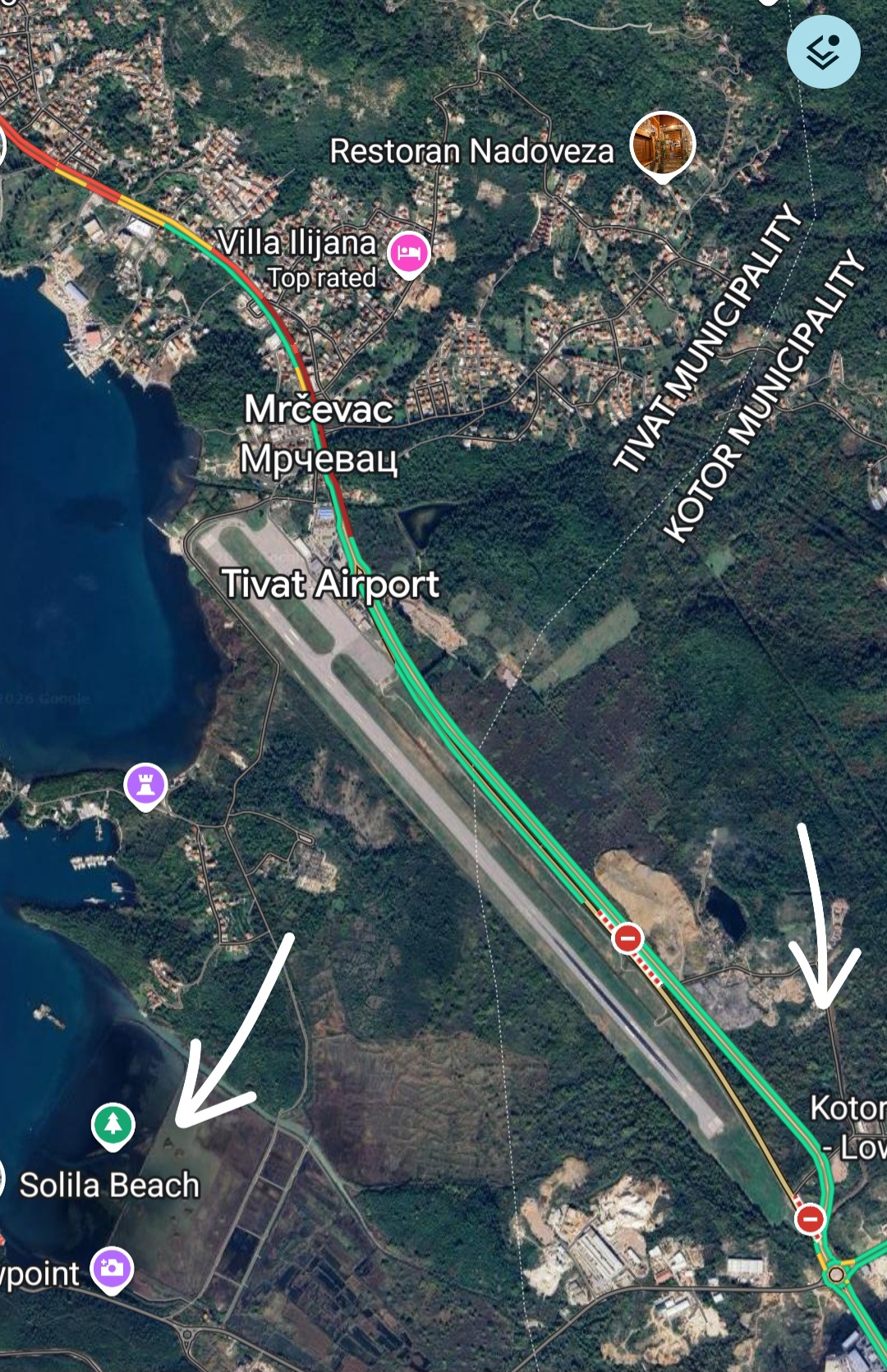
    Map showing Tivat Airport with Solila to the southwest and the reported landfill site to the southeast
    Tivat Airport (TIV): Solila nature reserve sits southwest of the runway, by the coast; the reported waste site sits southeast, adjacent to the road toward Kotor — flanking the approach/departure path from both sides.

    The result is that Tivat effectively has two bird-attractant systems stacked on top of each other at the exact moment traffic is at its seasonal peak — 2024 passenger numbers were up 32.5% year-on-year, and summer accounts for roughly 80% of annual volume. Airports of Montenegro says it applies radar-based detection and standard dispersal measures, but detection and dispersal can only do so much against a food source sitting a few hundred meters from the threshold.

    Solila will remain a fixture of Tivat’s operating environment; that trade-off is the price of a genuinely scenic, biodiverse coastline. The landfill is the part of this story that has a straightforward fix — if the responsible authorities act on the warnings already on file.

    Sources: Aviation Herald, Ground News, Investitor.me, Skala Radio, Portal Analitika, Grokipedia, Tivat Tourism Organisation, natureforpeople.org, Montenegro AIP (AD 2.LYTV), Jeppesen LYTV charts, public NOTAM records.
  • Bird Strike After Rotation: Examples, Procedures, Holding, Fuel, and Checklists

    Bird Strike After Rotation: Examples, Procedures, Holding, Fuel, and Checklists

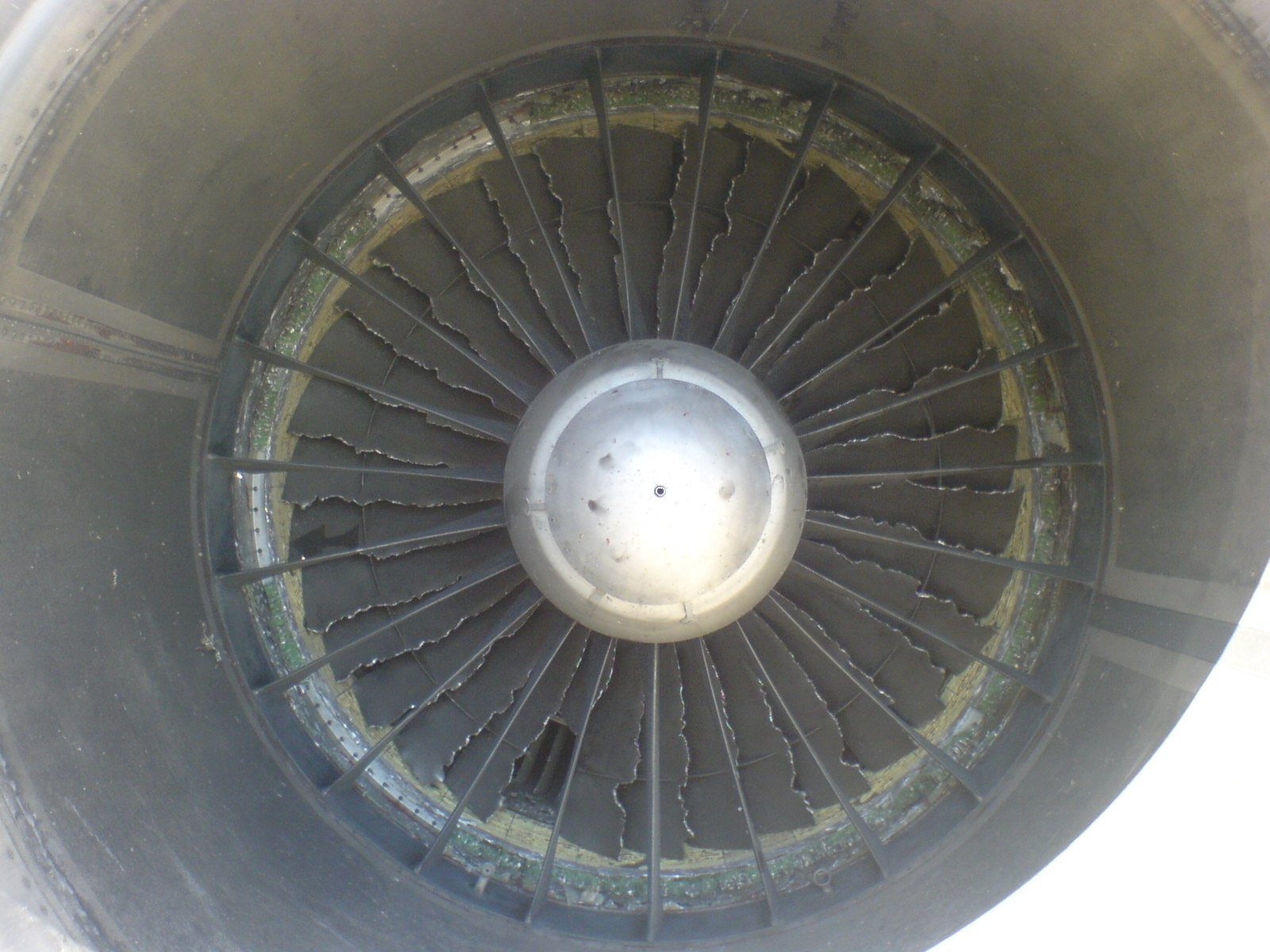
    Photo: Plenumchamber, licensed under CC BY-SA 3.0.

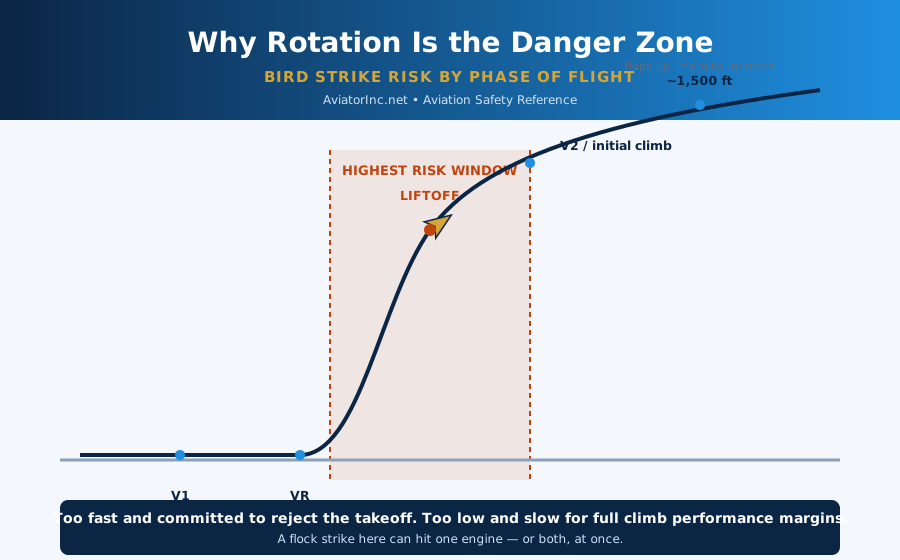
    There’s no worse moment for a bird to cross your flight path than the two or three seconds after rotation. You’re airborne but barely so — too fast and too committed to stop on the remaining runway, too low and too slow to have the full climb performance a jet is designed around. If the strike is a single bird, it’s usually a loud bang and a maintenance write-up. If it’s a flock, both engines can go quiet at once, and the crew has to fly a genuine emergency with almost no altitude to work with.

    Diagram showing why rotation and initial climb is the highest-risk phase for bird strikes

    Three times it happened for real

    Bird strikes at rotation aren’t a theoretical training scenario — they’ve shaped how airplanes are certified and how crews are trained, largely because of a handful of incidents that went very differently from each other.

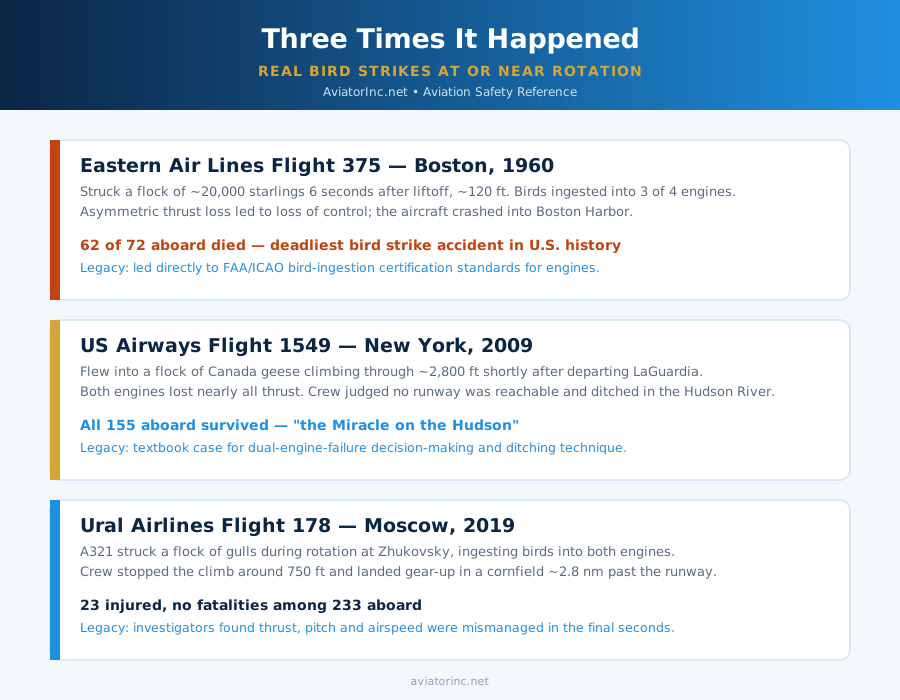
    Eastern Air Lines Flight 375, a Lockheed Electra departing Boston in October 1960, flew into a 20,000-strong flock of starlings seconds after liftoff and lost control from asymmetric engine thrust. US Airways Flight 1549, an Airbus A320 departing LaGuardia in January 2009, lost both engines to a flock of Canada geese and ditched in the Hudson River. Ural Airlines Flight 178, an A321 departing Zhukovsky in August 2019, struck birds in both engines during rotation and came down gear-up in a cornfield.

    Comparison of three real bird strike incidents at or near rotation: Eastern 375, US Airways 1549, Ural Airlines 178

    What separates the 1960 Boston accident and the 2019 Moscow accident from the 2009 Hudson ditching isn’t luck alone. Sullenberger and Skiles had roughly three minutes and about 2,800 feet to work the problem before committing to a landing site — enough altitude to think. The Eastern and Ural crews had seconds and a few hundred feet. That’s the entire argument for why the procedures below exist: they’re designed to buy a crew the clearest possible picture of the aircraft before it runs out of altitude to use.

    A recent case close to home

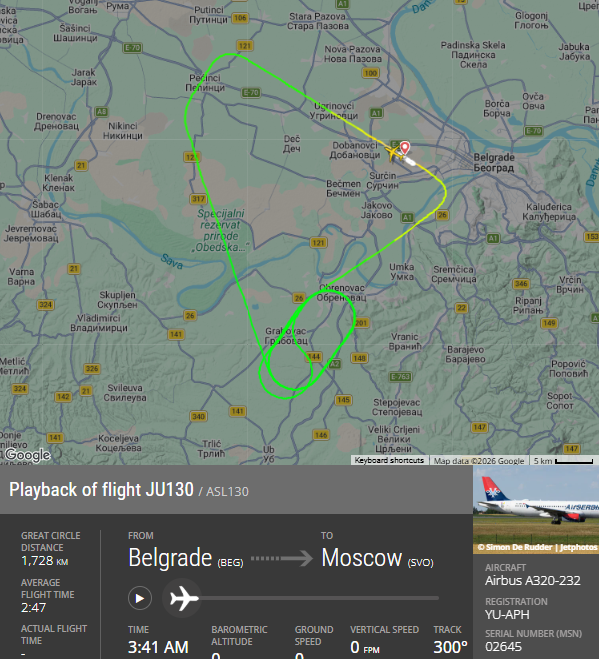
    This isn’t just a historical pattern. On Friday, 17 July 2026, Air Serbia Flight JU130, an Airbus A320 (registration YU-APH) departing Belgrade Nikola Tesla Airport for Moscow, struck a bird shortly after takeoff, during the initial climb. The impact damaged the right engine. The crew declared “PAN PAN” — the standard urgency call, one step below a Mayday — and elected to return rather than continue toward Moscow. Public flight-tracking data shows the aircraft flying two holding patterns south of Belgrade — a larger one first, then a tighter one closer in — before lining up and landing back at Belgrade without incident. Nobody on board was hurt.

    FlightAware playback of Air Serbia JU130 showing the actual flight track with two holding patterns south of Belgrade before landing back at BEG
    Flight track via FlightAware (playback of JU130 / ASL130).

    It’s a textbook illustration of everything above, at a much smaller scale than Eastern 375, Ural 178, or the Hudson: a single engine affected rather than both, altitude and time enough to run the procedure properly, a deliberate return rather than a scramble, and an outcome that barely made the news because the system worked exactly as designed.

    The first ten seconds: fly the airplane, then diagnose

    The instinctive reaction to a bang, a flash, or a smell of burnt feathers is to look for what happened. That’s the wrong first move. The trained response is to hold pitch and airspeed and let the engine instruments — not assumption — say what’s actually going on. A strike on one engine is a very different problem from a strike on both, and at 300 feet you often can’t tell the difference by feel alone.

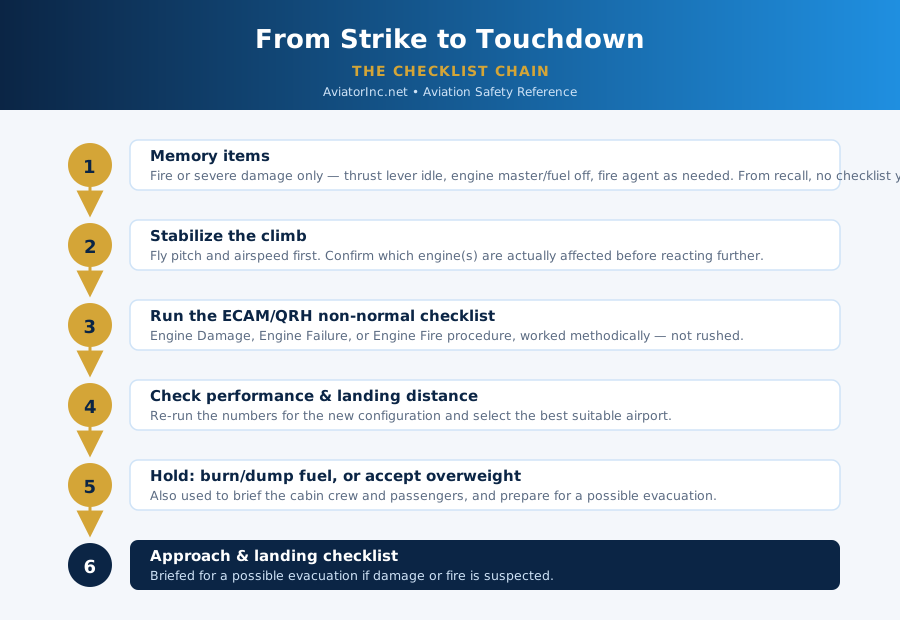
    If the indications are severe — an engine fire warning, or clear signs of a severe, uncontained failure — the response is a set of memory items: thrust lever to idle, the affected engine’s fuel/master switch off, fire agent discharged if called for. These are done from recall, before anyone opens a checklist, because there isn’t time to read. Anything short of that — vibration, an EGT spike, suspected damage without fire — is flown as a controlled single-engine (or reduced-thrust) climbout while the crew works the applicable non-normal procedure.

    On Airbus aircraft this is largely ECAM-driven: the system detects the failure and presents the checklist. Boeing crews lean more on recognizing the failure themselves and pulling the correct QRH procedure. Either way, once the memory items (if any) are complete, the rest is worked deliberately — item by item, not from memory, and not rushed.

    Six-step checklist chain from bird strike memory items through approach and landing

    Why crews hold instead of turning straight back

    Once the aircraft is climbing safely and the checklist is under control, the instinct from the ground looking up is usually “just land, now.” In practice, crews will almost always request a hold near the departure airport instead of an immediate return. The hold isn’t hesitation — it’s exactly what separates a controlled outcome from a rushed one.

    That time is used to finish the non-normal checklist properly, brief the cabin crew on what happened and whether landing will require an evacuation, get passengers briefed and the cabin secured, recompute landing performance for the aircraft’s actual configuration, and coordinate the approach and any emergency services with ATC. It’s also, simply, time to think rather than react — the Ural 178 investigation is often cited precisely because the crew didn’t use the altitude they had to fully stabilize the aircraft’s energy state before landing.

    The other reason to hold: weight

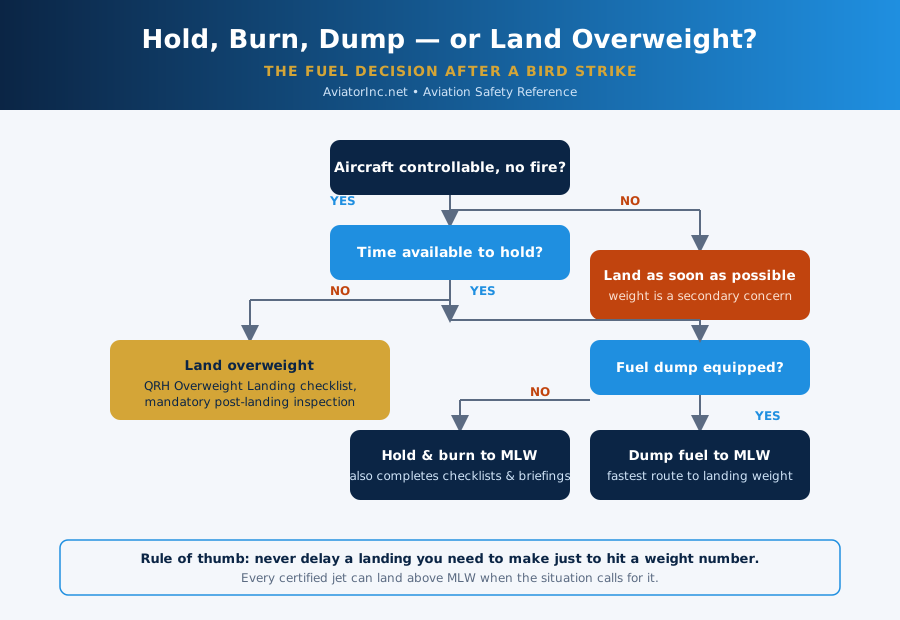
    Most jets take off well above their maximum landing weight, since they burn down fuel over the course of a normal flight. Landing overweight increases stopping distance and structural loads on the gear and airframe, so if there’s no urgency — no fire, no fuel leak, damage that’s serious but controllable — the crew will hold and burn fuel down toward max landing weight, or, on aircraft fitted with a jettison system, dump fuel to get there faster.

    Decision flowchart: hold and burn fuel, dump fuel, or land overweight after a bird strike

    But weight is never allowed to be the deciding factor in when to land. Every certified transport aircraft has an Overweight Landing procedure in the QRH for exactly this situation: it adjusts approach speed, sets the expectation of a firmer-than-normal touchdown, and requires a structural inspection once the aircraft is on the ground. If the situation is time-critical, crews are trained to use it without hesitation rather than extend a hold to chase a fuel number. The rule that gets taught: burn or dump fuel if you have time to spare, land overweight if you don’t — but never delay a landing you actually need to make.

    The takeaway

    None of this is about memorizing a script for its own sake. Every step — the memory items, the deliberate checklist pace, the hold, the weight decision — exists to give a crew the clearest possible picture of a damaged aircraft before altitude runs out. Eastern 375 didn’t have that time. US Airways 1549 did, and used every second of it. That’s the entire difference the procedure is designed to protect.

  • Regulators Update Fatigue Management Rules

    Regulators Update Fatigue Management Rules

    Aviation safety regulators in several regions have proposed updates to flight and duty time regulations, aiming to better account for circadian rhythm science in scheduling long-haul and red-eye operations.

    Industry groups have generally welcomed the proposals while requesting a longer transition period for implementation.