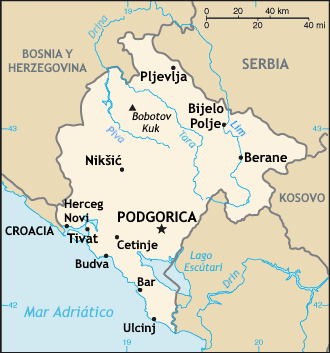
For seven years, Montenegro tried to hand over its two international airports — Podgorica (TGD) and Tivat (TIV) — to a private operator under a 30-year concession. In July 2026, that attempt collapsed. Here is how it happened, and what comes next.

The Plan: 2018–2019
In August 2018, Montenegro’s Ministry of Transport and Maritime Affairs opened public consultation on a concession act and draft contract covering the airports of Podgorica, Tivat, and Berane. A year later, on 25 July 2019, the government of then-Prime Minister Duško Marković formally adopted the concession act and contract framework. The terms were ambitious: a one-time payment of €100 million to the state budget, plus €200 million in mandatory investment over the following 30 years.
The formal tender opened on 11 October 2019, when the ministry — led by Osman Nurković — published the call for prequalification applications.

Prequalification and the First Casualties: 2019–2021
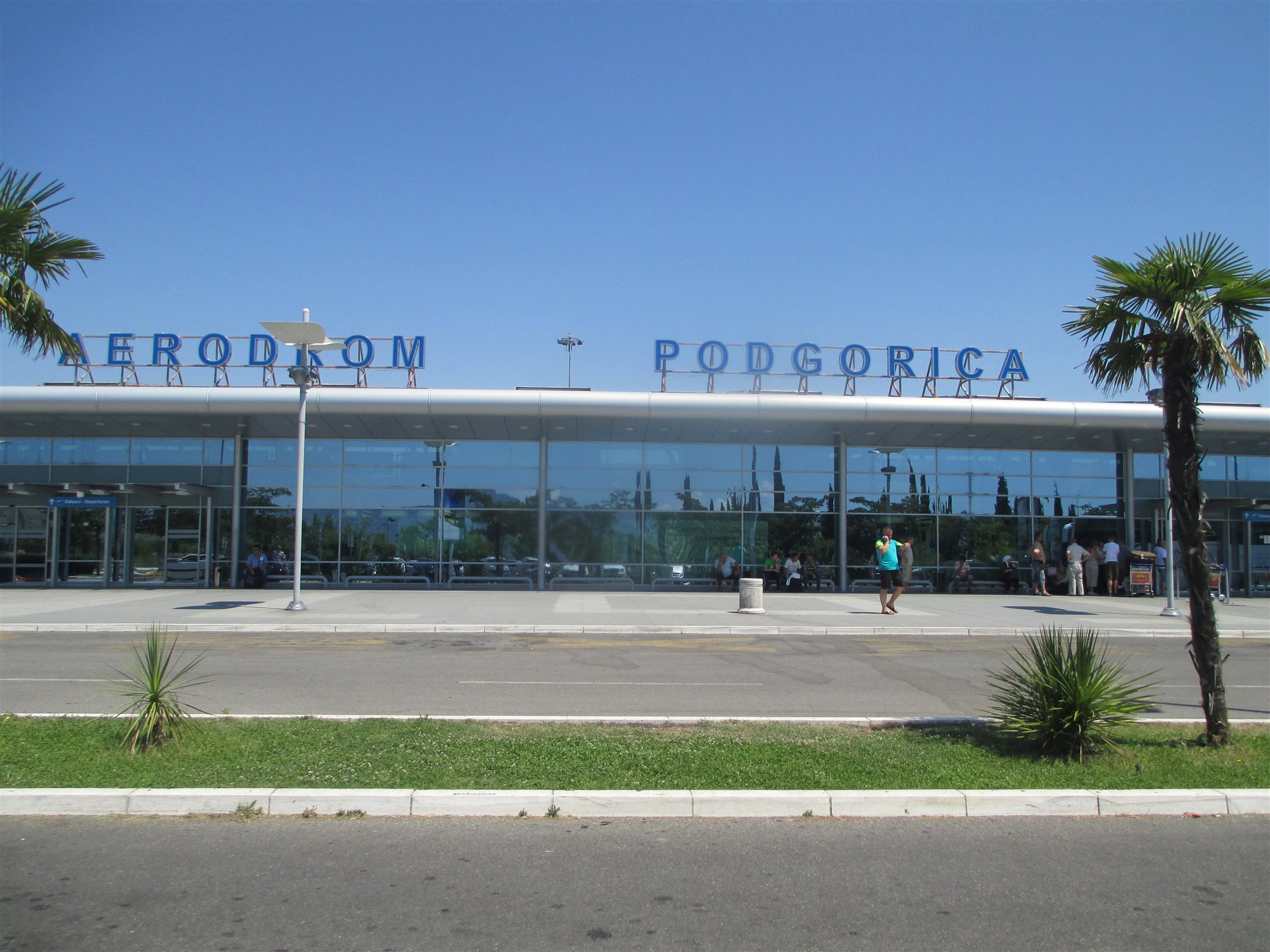
Seven bidders applied for prequalification. Four were initially cleared — South Korea’s Incheon International Airport Corporation (IIAC), India’s GMR Airports, Luxembourg-based Corporación América Airports (CAAP), and the French-Turkish consortium ADP-TAV — though only three remained on the government’s official qualified list by the time the prequalification stage closed in December 2019.
The field narrowed almost immediately. GMR withdrew after France’s ADP — itself competing with Turkey’s TAV — acquired a 49% stake in the Indian company, creating a conflict under the tender’s ownership rules. The International Finance Corporation (IFC), engaged by the government from the start to structure the concession, supported the Tender Commission through the prequalification stage, which formally closed in December 2019 with three qualified bidders on the list: IIAC, CAAP, and the ADP-TAV consortium.
A Four-Year Standstill
What should have followed was a swift move into the binding tender phase. Instead, the procedure ground to a halt almost immediately: by the government’s own later account, it stagnated from March 2020 — as the COVID-19 pandemic upended global aviation — until essentially no formal progress was made for close to four years. Informal contacts continued in the meantime; in late October 2021, the three remaining bidders held presentations for the government of Prime Minister Zdravko Krivokapić, but this did not translate into procedural movement. It wasn’t until early December 2023 that the government asked the IFC to re-engage with the project, and a second-phase Tender Commission was formally constituted in February 2024.
Years of Delay, Disputes, and a Fractured Commission
Once formally restarted, the process continued to drag, passing through successive governments — Krivokapić, then Abazović, then Spajić — each bringing changes to terms, renewed disputes, and mounting controversy. At one point, members of the Tender Commission — including representatives from the Ministry of Finance and the Prime Minister’s cabinet — halted proceedings altogether, citing concerns about undue influence over individual commission members and unequal treatment of bidders. Several commissioners resigned in protest. The French-Turkish ADP-TAV consortium — informally considered a frontrunner for much of the process — ultimately withdrew before submitting a final binding offer, citing last-minute changes to key requirements, procedures, and rules by the government and Tender Commission, and hinting at possible legal action.
Serbia’s interest added a further complication. Serbian Finance Minister Siniša Mali publicly stated in mid-2025 that Serbia wanted in on the concession, claiming Belgrade was prepared to invest “double” what the draft contract envisioned. Montenegro’s Ministry of Transport rejected the idea, noting that no official or unofficial initiative from Serbian institutions had ever been submitted through the tender process.
Airport unions, meanwhile, pushed in the opposite direction — asking that the process be postponed and arguing that Airports of Montenegro (Aerodromi Crne Gore) didn’t need a concession at all, since the state-owned company was already profitable and, in their view, capable of financing its own development.
The Finish Line: 2025–2026
Despite the turbulence, the process reached its final stage in 2025, when two binding offers arrived: from IIAC, which scored 96.18 points, and CAAP, which scored 65.15. The government had originally expected to make a final decision in the first half of 2025 — but that timeline slipped by nearly a year. It wasn’t until early April 2026 that the government formally adopted a draft decision proposing to award the 30-year concession to IIAC, the top-ranked bidder.
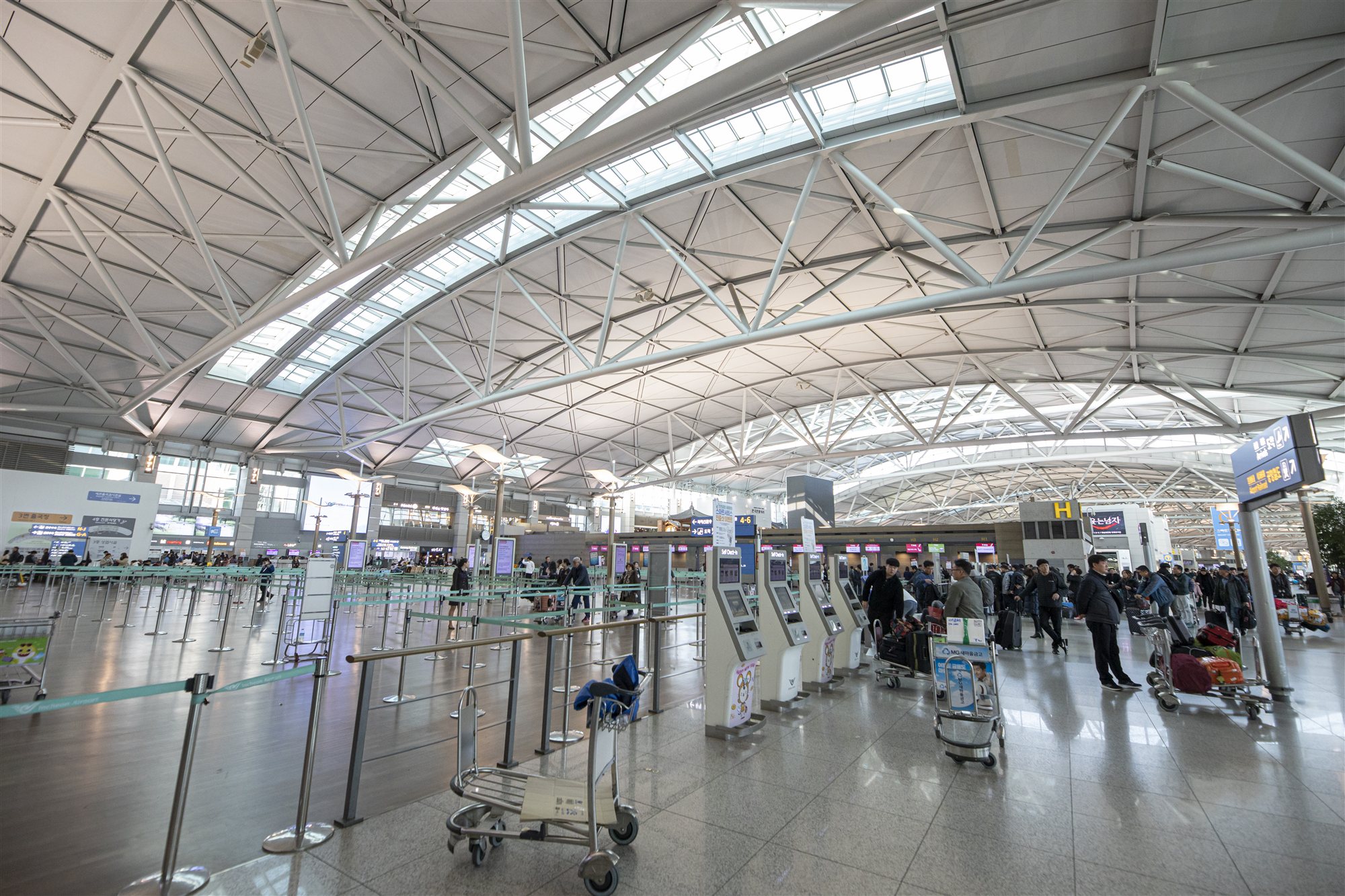

The terms disclosed at that point were substantial: an upfront payment of roughly €100 million, a variable fee equal to 35% of gross revenue, and an investment commitment of about €300 million, for a total nominal value near €1 billion over the concession’s life. Notably, the €100 million figure was not new — it had been set as the statutory minimum upfront payment in the original 2019 Concession Act, and IIAC’s winning bid matched that floor exactly rather than exceeding it. The Ministry of Transport had issued the formal call for binding offers to qualified bidders in December 2024; only IIAC and CAAP responded. IIAC’s own plan projected passenger traffic nearly tripling from about 3 million to 9 million a year — 5.4 million through Podgorica within seven years and 3.7 million through Tivat within five — achieved by quadrupling the airports’ footprint, building new terminals connected to the existing ones, doubling parking capacity, and rebuilding runways. The state was to retain ownership of all airport property throughout and after the 30-year term, with the concessionaire barred from mortgaging the assets. Because Airports of Montenegro’s fixed assets were valued at nearly €265 million, the deal legally required Parliament’s approval — with Prime Minister Milojko Spajić expected to sign the contract if lawmakers gave the green light. The International Finance Corporation (IFC), part of the World Bank Group, publicly backed the government’s effort to bring the seven-year process to a close.
The process was not without further friction even at this late stage: after the offers’ original validity expired on 7 May 2026, the Ministry of Transport twice requested extensions from both bidders — first to 7 July, then again after that deadline passed without a government decision. CAAP agreed to the second extension; IIAC did not. CAAP also wrote to Parliament warning that proposed amendments to the concession contract could cause Montenegro millions of euros in damage, filed a formal objection over the bid scoring (which the Concession Commission rejected in late December 2025), and Montenegro’s Administrative Court separately rejected a lawsuit challenging a decision of the Concession Commission.
The Collapse: July 2026
None of it reached signature. On 8 July 2026, once the extended deadline lapsed, IIAC formally notified the Ministry of Transport that it was withdrawing from the process; the government made the news public roughly ten days later. Unofficial government sources cited by Montenegrin media pointed to a specific sticking point: IIAC was unhappy with the contract terms — specifically the timing of the €100 million upfront payment, which it had itself offered at exactly the 2019 statutory minimum — and had wanted that payment delayed or restructured. Other reporting suggested the years-long delay between IIAC being named preferred bidder and the tender actually reaching signature may itself have eroded the investment case for a South Korean state company weighing a multi-decade European commitment.
CAAP, the second-ranked bidder, said it remained ready to continue negotiations. But according to government sources, the executive branch judged CAAP’s financial offer unacceptable on its own terms, and opted instead to ask Parliament to annul the tender outright rather than negotiate with the runner-up. Unions at Airports of Montenegro welcomed the move, saying the collapse only confirmed what they had been arguing for months: that the concession model as proposed did not serve the interests of the company, its employees, or the state — and urged lawmakers to adopt the annulment “without delay.”
On 23 July 2026, the government formally proposed annulling the entire 2019 tender procedure, sending that recommendation to Parliament (Skupština) for consideration. Seven years after the public call was first published, the tender that was meant to modernise Montenegro’s two busiest airports ended without a signed deal.


What Comes Next: The State-Funding Alternative
The collapse reopened a question that had shadowed the entire process: could Airports of Montenegro simply finance its own modernisation?
By early September 2026, that question had moved to the centre of the debate. Prime Minister Milojko Spajić announced urgent preparation of a new Master Plan for the long-term development of both airports, along with an inter-ministerial coordination body to lead the effort — with a stated goal of having priority works underway before the 2027 summer season.
At the same time, Airports of Montenegro CEO Roko Tolić told Regionpress that the state company could fund a €200–300 million modernisation programme itself, without a concessionaire — citing strong company finances and confidence that domestic and international lenders would be willing to extend credit on favourable terms. Tolić estimated that self-financed development would take roughly five years to reach the infrastructure level the airports should already have achieved.
The scale of the underlying pressure is not in dispute. Airports of Montenegro carried more than 3 million passengers for the first time in 2025, and management now expects to hit that mark again by the end of September 2026 — three months earlier than the previous year. Some of that growth is attributed to a new incentive scheme for airlines: nearly €13 million in incentives paid out in 2025, with €18 million projected for 2026, aimed at opening new routes and sustaining service outside peak summer season.
Two Paths, One Unresolved Choice
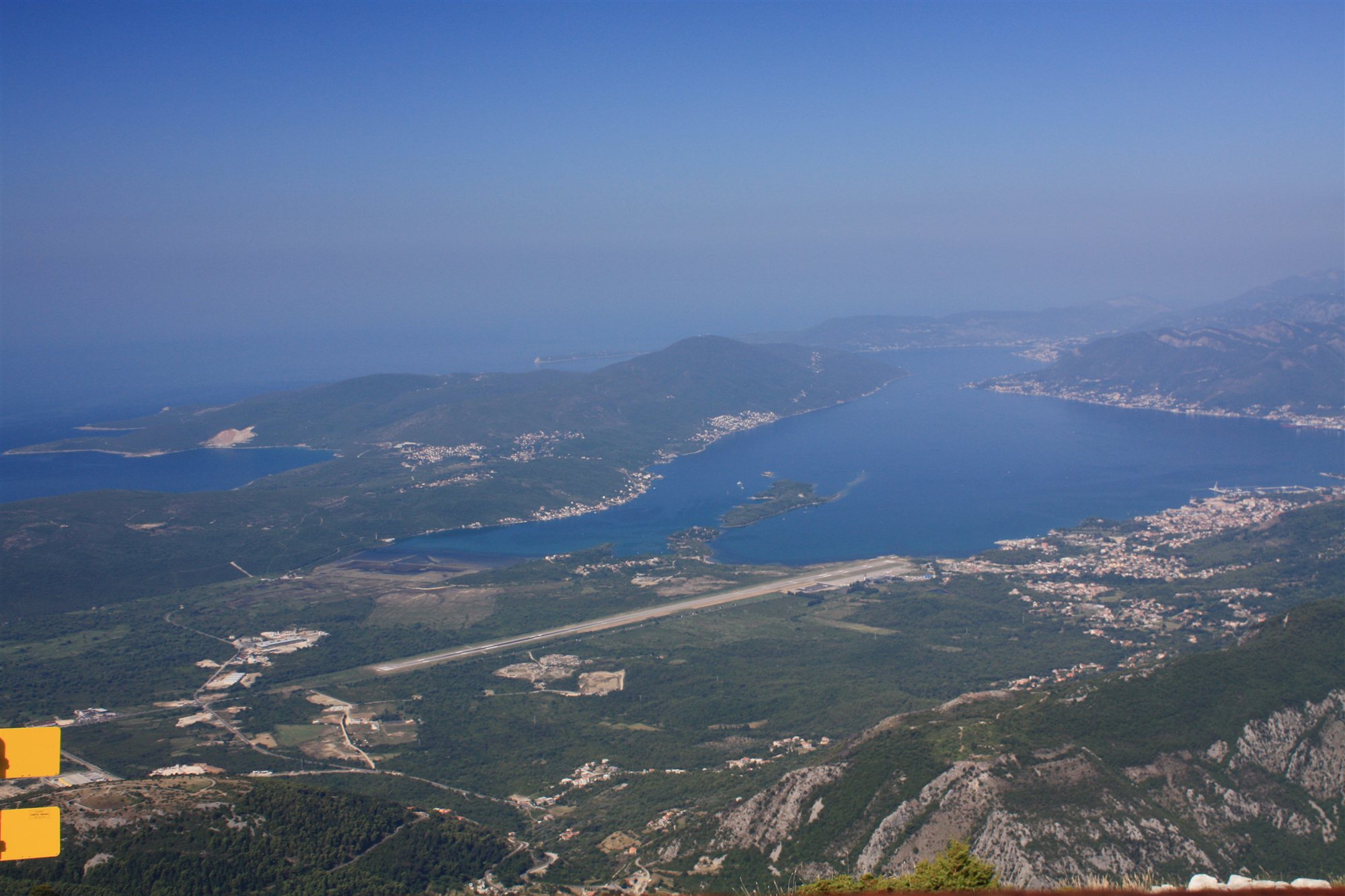

The government’s plans for Podgorica include a new terminal, an expanded and reconstructed apron, and a longer runway — with the long-term goal of accommodating wide-body aircraft and enabling direct long-haul routes. Tivat’s plan includes a new terminal, apron, taxiway, and a full runway reconstruction. The new Master Plan is also intended to serve a practical purpose beyond design: it is a formal prerequisite for applying to EU grant programmes and favourable financing from international financial institutions.
Whether that development happens under state ownership or a revived concession model remains genuinely open. A concession could deliver a faster capital injection and accelerate construction; retaining state ownership keeps future profits with the state but carries the risk of slower administrative processes and exposure to political change. Tolić’s own warning may be the most pointed part of the story: the biggest risk, he said, isn’t choosing one model over the other — it’s continuing indefinitely without choosing either.
Sources: Government of Montenegro (gov.me); Avio Portal; Investitor.me; Aero Telegraf; N1 Info; Portal Analitika; CdM; Aktuelno.me; Bankar.me; Press Online; Srpska Info; Primorski Portal; Borba.me; Dan.co.me; Adria TV Portal; SeeNews; EX-YU Aviation News; MINA Business; Montenegrobusiness.eu; Kodex.me; Monitor.co.me; Radio Skala.
Leave a Reply